
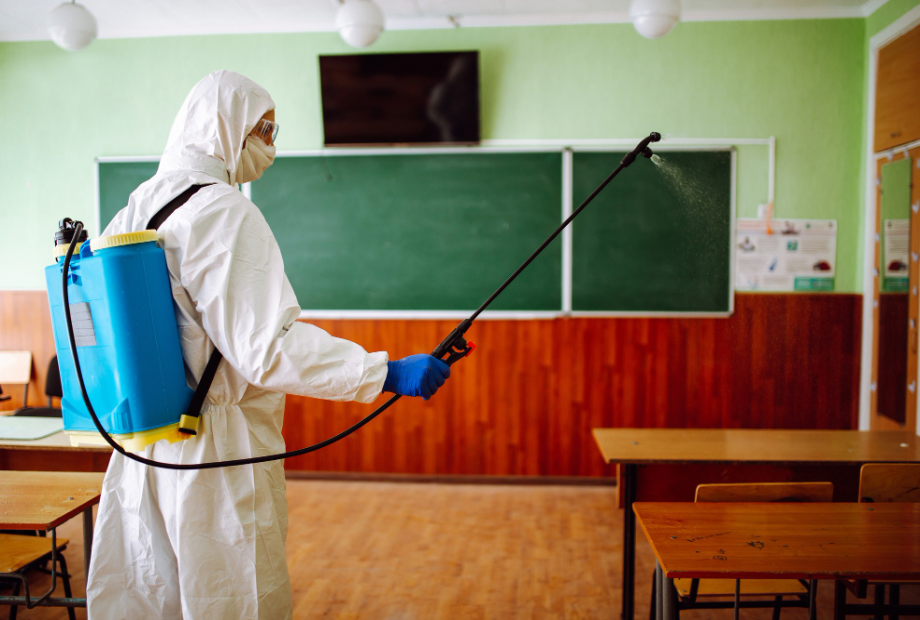
Students, teachers, and staff share classrooms, restrooms, cafeterias, hallways, and other spaces throughout the school day. Many people also touch the same desks, door handles, faucets, and classroom materials.
Regular cleaning helps remove dirt and germs from these surfaces. It cannot eliminate every risk of infection, but it can help reduce the chances of germs spreading through shared spaces. Cleaning is one part of maintaining a healthy school environment, along with practices such as handwashing and keeping indoor air fresh.
Cleaning Helps Reduce the Spread of Germs
Frequently touched surfaces can collect germs as students and staff use them throughout the day. Desks, door handles, keyboards, faucets, and shared learning materials all need regular attention.
A consistent cleaning routine helps remove dirt and germs from these surfaces. The CDC recommends regularly cleaning and sanitizing commonly touched surfaces and shared objects in schools.
Some School Areas Need More Frequent Attention
Different spaces see different levels of activity. A classroom may need regular care for desks and floors, while restrooms, cafeterias, gyms, and hallways may need attention more often because many people use them.
A school cleaning plan can account for how each area is used and which surfaces students and staff touch most. This helps keep the building cleaner throughout the school day.
A Clean School Is More Comfortable for Learning
Students and teachers spend much of their day inside the school. Clean classrooms, clear floors, and orderly shared spaces make the building more comfortable to use and help everyone focus on the activities taking place.
Cleanliness also shapes how the school feels to families and visitors. Well-kept entrances, hallways, and restrooms show that the space receives regular care.
Cleaning and Disinfecting Are Not the Same
Cleaning removes dirt and germs from a surface. Disinfecting uses products to kill germs and may be needed in certain situations. Schools should follow their own procedures to decide when each is appropriate.